Affordable Sewer Line Repair in Concord, NH
A sewer line failure rarely announces itself politely. One day everything drains as it should, and the next you notice a slow gurgle in the basement, a patch of unusually green grass over the yard, or the unmistakable smell of sewage backing up into a floor drain. By the time most Concord homeowners realize something is wrong with their main sewer line, the problem has already been developing for weeks or months underground. That is exactly why understanding how these systems work, how they fail, and how they get repaired matters so much. At Paul the Plumber, we handle sewer line repair in Concord, NH with a methodical approach built on diagnosis first, so that you are never paying to dig up a line that does not need it.
How a Residential Sewer Line Actually Works
Your sewer line is the single pipe that carries all wastewater from your home to the municipal main under the street or, in some cases, to a private septic system. Every drain in the house eventually feeds into it: toilets, sinks, showers, washing machines, and floor drains all connect to branch lines that converge into one main lateral. That main line relies entirely on gravity. It is pitched at a precise downward slope, typically a quarter inch of drop per foot of run, so that solids and liquids move together toward their destination without pooling.
When that slope is disrupted by settling soil, root intrusion, or a collapsed section, waste stops flowing cleanly. Instead, it slows, accumulates, and eventually blocks the pipe. Because the sewer line is usually buried several feet underground and often runs beneath driveways, landscaping, or foundations, it is both the hardest part of a plumbing system to inspect and the most disruptive to replace incorrectly. Older homes in Concord commonly have clay, cast iron, or Orangeburg lines, each of which fails in its own particular way, and knowing which material you have changes everything about the repair strategy.
What Causes Sewer Lines to Fail in Concord, NH
New Hampshire’s climate puts unusual stress on buried pipes. Deep frost cycles push and pull the soil around a line season after season, slowly shifting joints out of alignment. Add in mature trees, aging infrastructure, and the heavy clay soils common throughout the region, and you have a recipe for the kinds of failures we see most often. Understanding the cause of a failure is the first step toward choosing the right repair, because a cracked pipe from root intrusion is a very different job than a line that has bellied from soil settlement.
The most frequent sources of trouble we encounter underground include the following:
- Root intrusion: Tree and shrub roots are drawn to the moisture and nutrients inside a sewer line, and they work their way into tiny joint gaps until they form a dense mass that catches debris.
- Pipe corrosion: Older cast iron lines rust from the inside out, developing rough interior walls that snag waste and eventually flake away into holes.
- Bellied sections: When soil settles unevenly beneath a pipe, a low spot forms that holds standing water and sludge, defeating the gravity flow the system depends on.
- Joint separation: Freeze and thaw movement pulls pipe sections apart at their connections, letting wastewater escape and soil infiltrate.
- Collapsed or crushed pipe: Orangeburg and other older materials can deform under ground pressure until the pipe loses its round shape entirely and blocks flow.
Our Diagnostic Process Before Any Digging Begins
We never guess where a sewer problem lives. The first thing we do on a sewer call is run a flexible, waterproof camera down the line from a cleanout access point. This video inspection lets us see the interior condition of the pipe in real time, locate the exact point of failure, and measure how far down the line the problem sits. The camera transmits a signal that we trace from above ground, so we can mark the precise spot in your yard where a break or blockage is located, often within inches.
That accuracy changes the entire economics of a repair. Instead of excavating a long trench and hoping to find the trouble, we know exactly where to dig and how deep. The camera inspection also tells us the pipe material, the severity of any root growth, and whether the line is still structurally sound enough for a spot repair or whether a larger section needs replacement. We walk you through the footage so you can see the condition of your own line with your own eyes rather than taking our word for it. This transparency is part of how we deliver the up front pricing we are known for, because a clear diagnosis produces a clear, honest estimate.
Repair Methods We Use
There is no single right way to fix a sewer line. The correct method depends entirely on what the camera reveals, the pipe material, the depth of the line, and what sits above it. For a localized break under open lawn, a traditional spot excavation is often the most direct and cost-effective solution. We dig down to the damaged section, remove the failed pipe, and splice in new material using proper couplings and bedding to restore the original slope.
For more extensive damage, or for lines running beneath driveways and finished landscaping, we evaluate trenchless options that minimize surface disruption. These approaches let us rehabilitate or replace a line through small access points rather than excavating the entire run. When roots are the problem but the pipe is otherwise intact, mechanical cutting and hydro jetting can clear the line and restore full flow, followed by a maintenance plan to keep regrowth in check. Whatever the method, we restore the proper pitch, use materials rated for the application, and verify the finished work with a second camera pass before we consider the job complete.
Why Concord Homeowners Call Paul the Plumber
Sewer work is serious, and the company you hire matters as much as the method they use. We are family owned and operated, and we have spent 22 years building a reputation for doing underground work the right way the first time. We are BBB accredited with an A+ rating, and we carry thousands of verified 5-star reviews across multiple review platforms. Every technician who arrives at your home is licensed and background checked, so you can feel comfortable with the person working on your property.
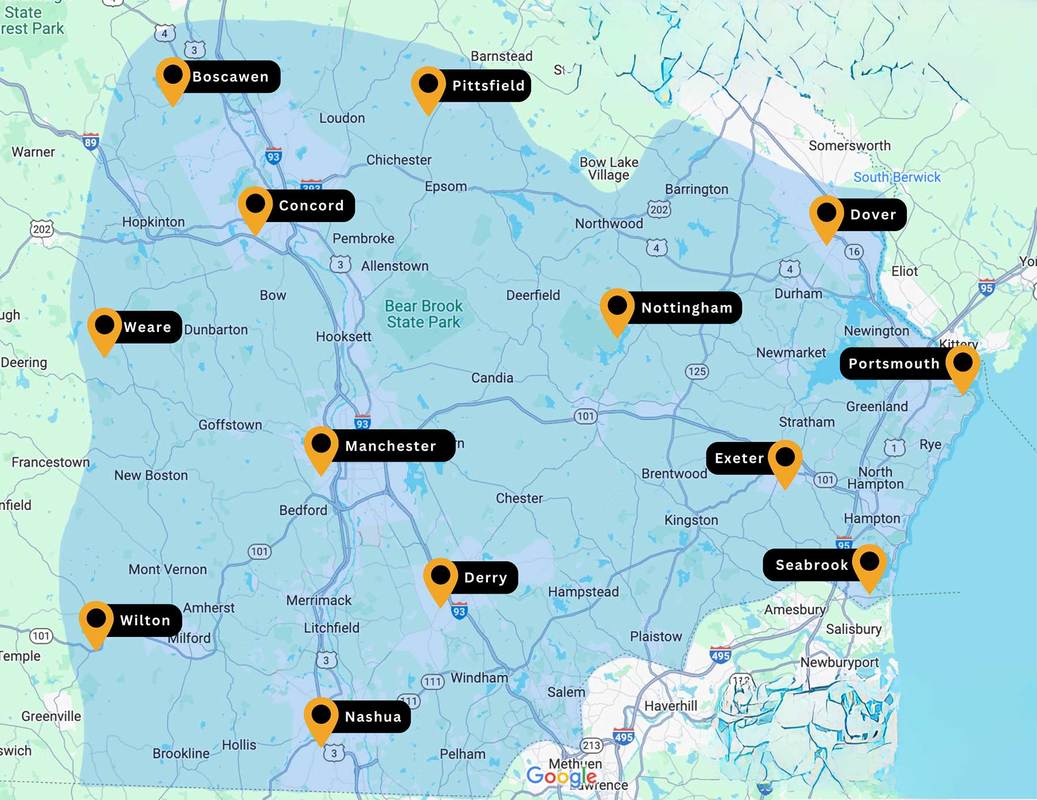
We back all of our work with a 2 year parts and labor warranty, and members of our club program receive an extended 3 year parts and labor warranty. We offer up front pricing, which means you approve the cost before any work starts, with no surprises once the trench is open. We treat customers like family and we treat our employees like family, because we believe the two go together. We care about the outcome, we work with integrity, and we are reliable when you need us. Alongside sewer line repair, we handle a full range of plumbing, heating, cooling, and electrical services, including AC repair, furnace repair, HVAC installation, and more throughout Derry, NH.
Protecting Your Line After the Repair
Once your sewer line is repaired, a little preventive attention keeps it healthy for decades. We recommend periodic camera inspections for older homes, especially those with mature trees near the line, so that root intrusion is caught before it becomes a blockage. Being mindful of what goes down the drain also makes a real difference, since grease, wipes, and other non-flushable items are frequent contributors to the clogs we clear.
If you have noticed slow drains, recurring backups, gurgling fixtures, or soggy spots in your yard, those are early warning signs worth investigating now rather than after a full backup. We are happy to help, and we offer service with a smile. Reach out to Paul the Plumber for sewer line repair in Concord, NH, and let us give you a clear, honest look at what is happening under your home.